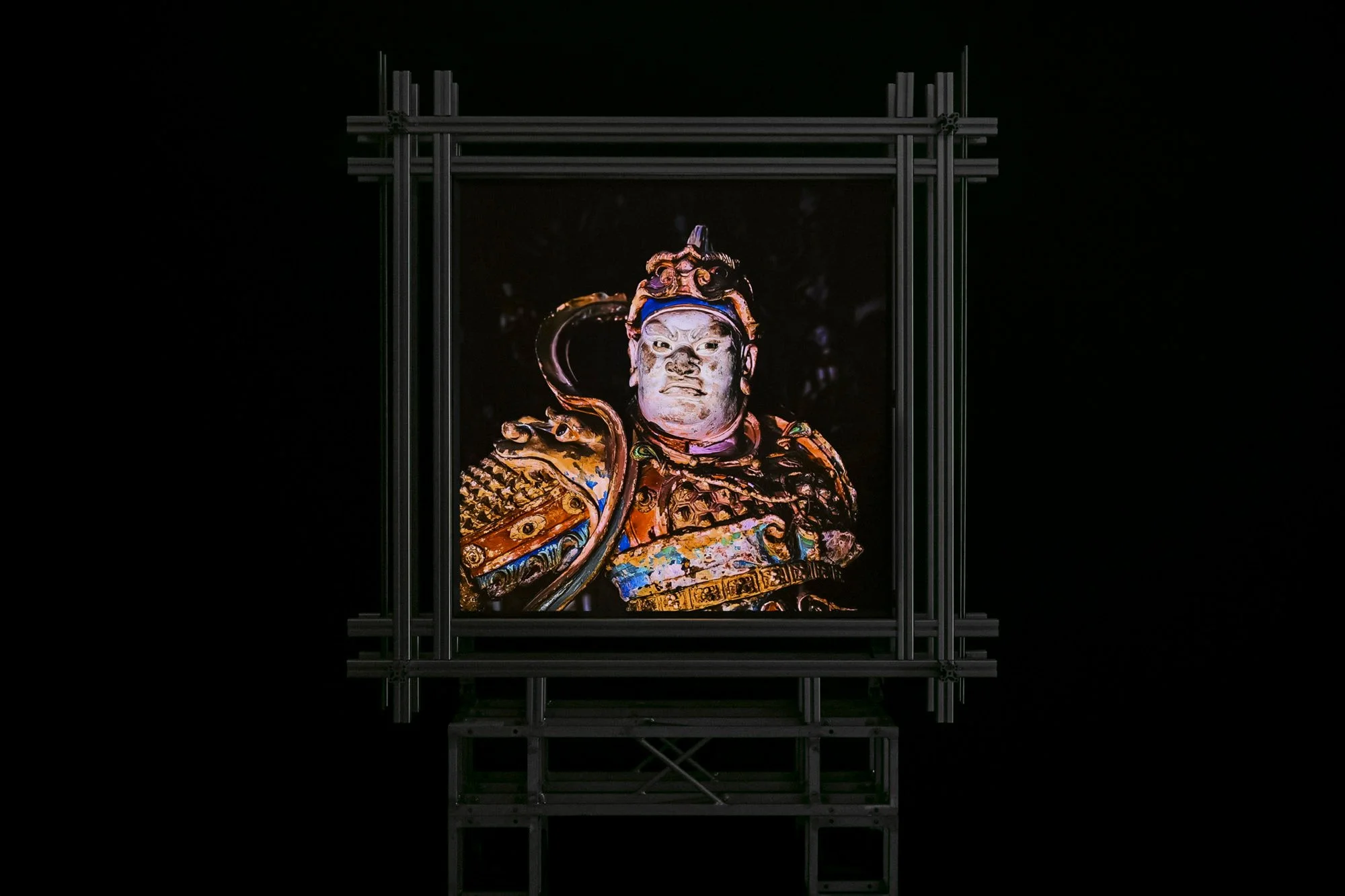
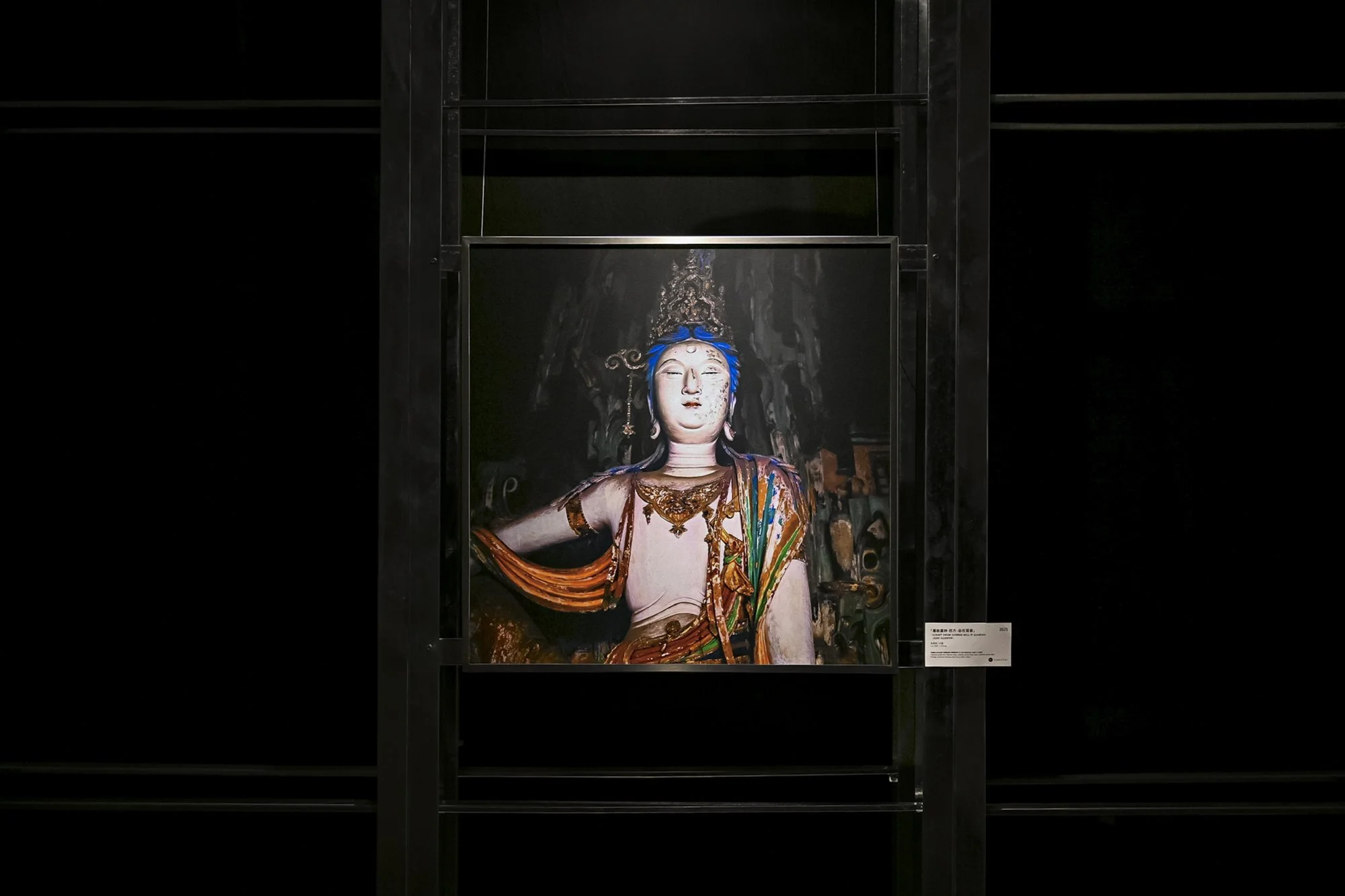
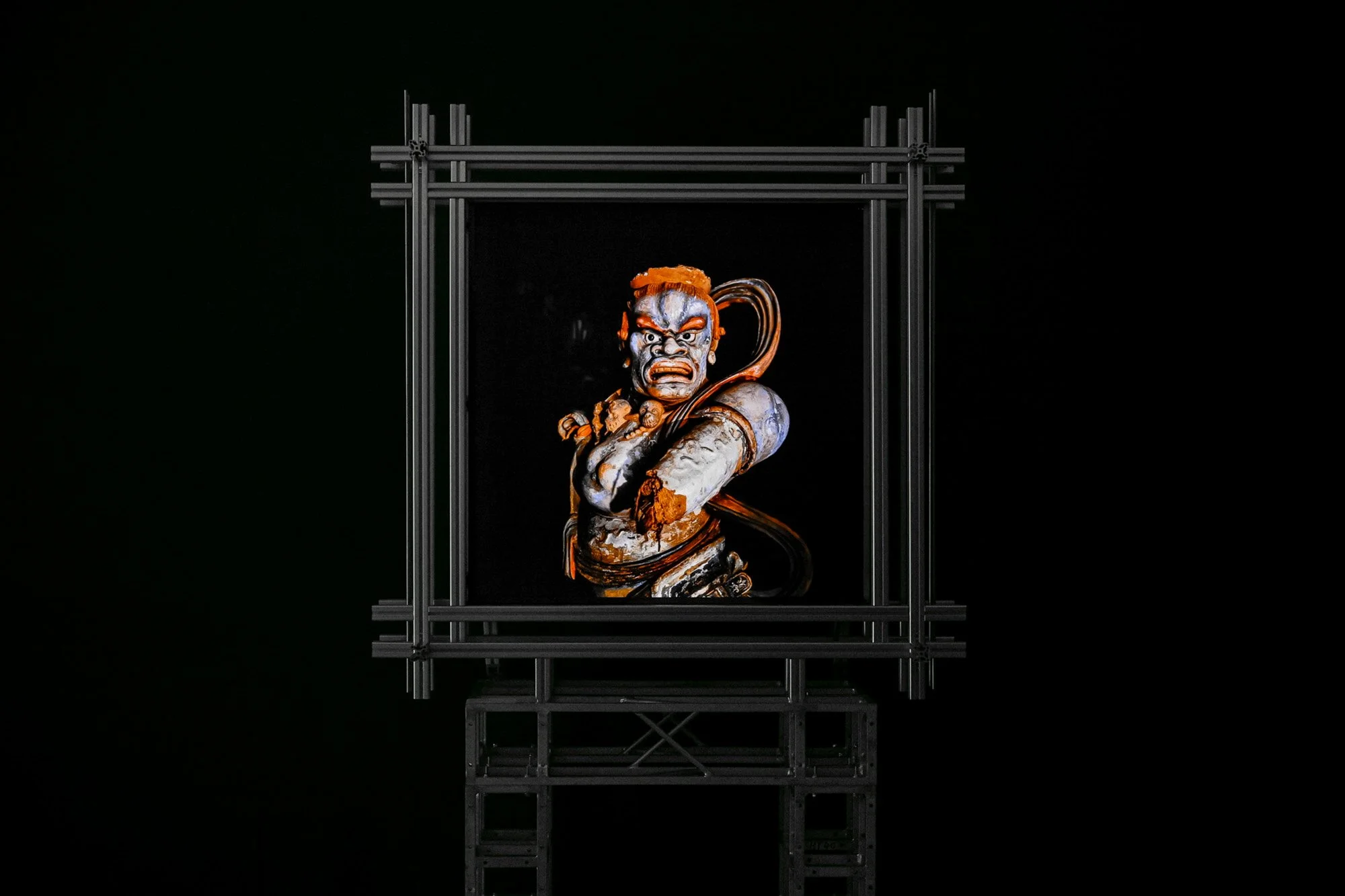
2025 「暮鼓晨钟 · 四方」SUNSET DRUM SUNRISE BELL: IV Quadrate
Sunset Drum Sunrise Bell·IV Quadrate
TANK Shanghai, Shanghai, China 2025
My creative practice has long been shaped by elements of modern civilisation: industry, digital art, and electronic music. After spending many years in the United Kingdom, I returned to my homeland and relocated to Shanghai. This decision unexpectedly led to a renewed encounter with traditional Chinese culture. With a sense of estrangement—finding both the familiar and strange—I found my vision and spirit profoundly altered.
In the latest chapter of "SUNSET DRUM SUNRISE BELL", titled "IV Quadrate", I returned to the most fundamental way of gathering inspiration: traveling to factories and to deserted ancient temples, using my camera and recording equipment to engage with these spaces, attuning to the energy of religious iconography. The remnants of the old electronics industry, abandoned components, obsolete blueprints, the mechanical rhythms of automated production, converge with the aesthetics, sounds, and ritual instruments of Buddhism and Daoism. Sound gives shape to form; brushstrokes summon melody. I seek to explore a "figurative abstraction rooted in Chinese tradition" —where collisions of media activate sensory instinct and create an immersive field of experience. Rather than a finished work, this project is better understood as a personal baptism or an introspective journey articulated through the act of making.
This is a quiet offering.
-LU SISI
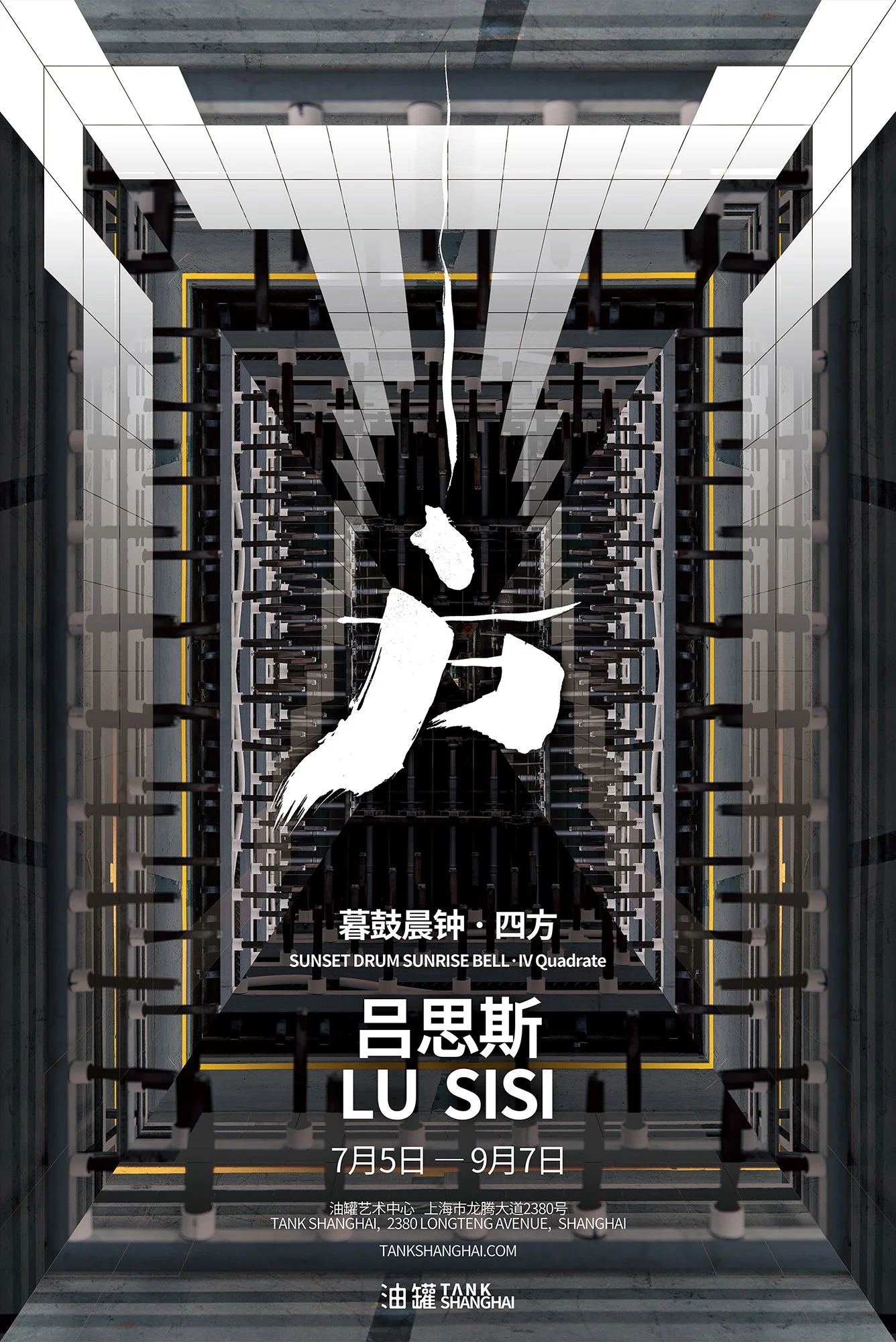
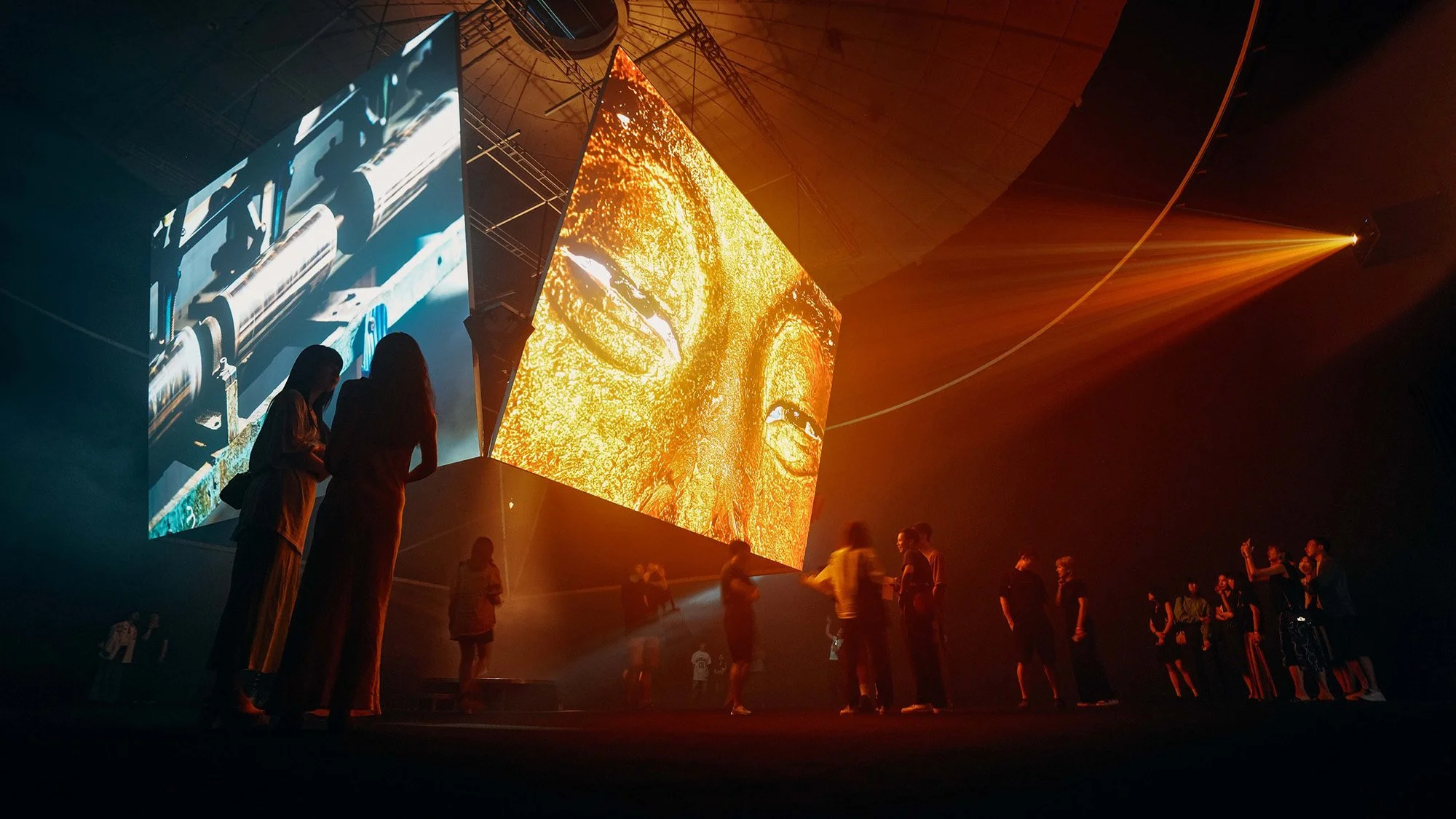
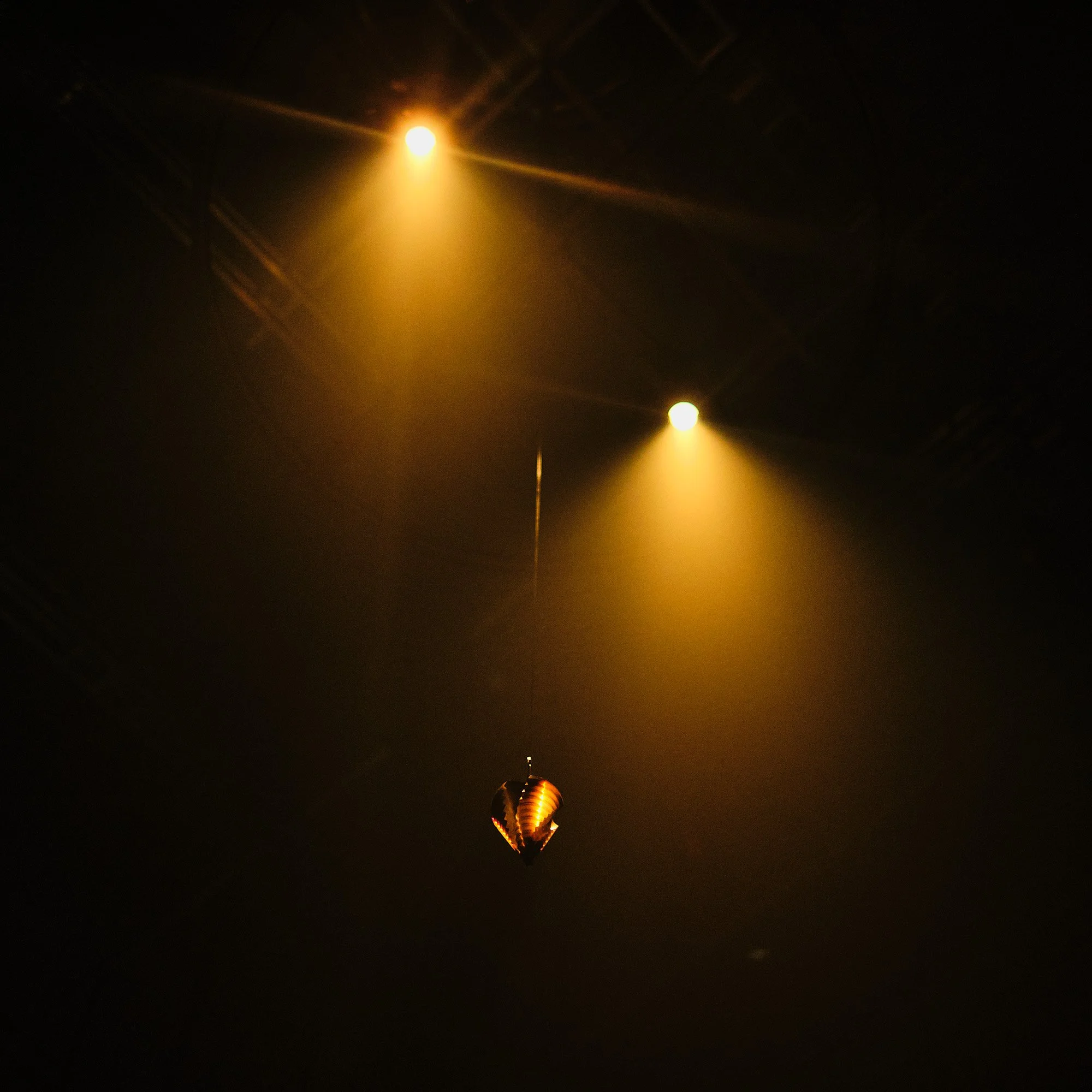
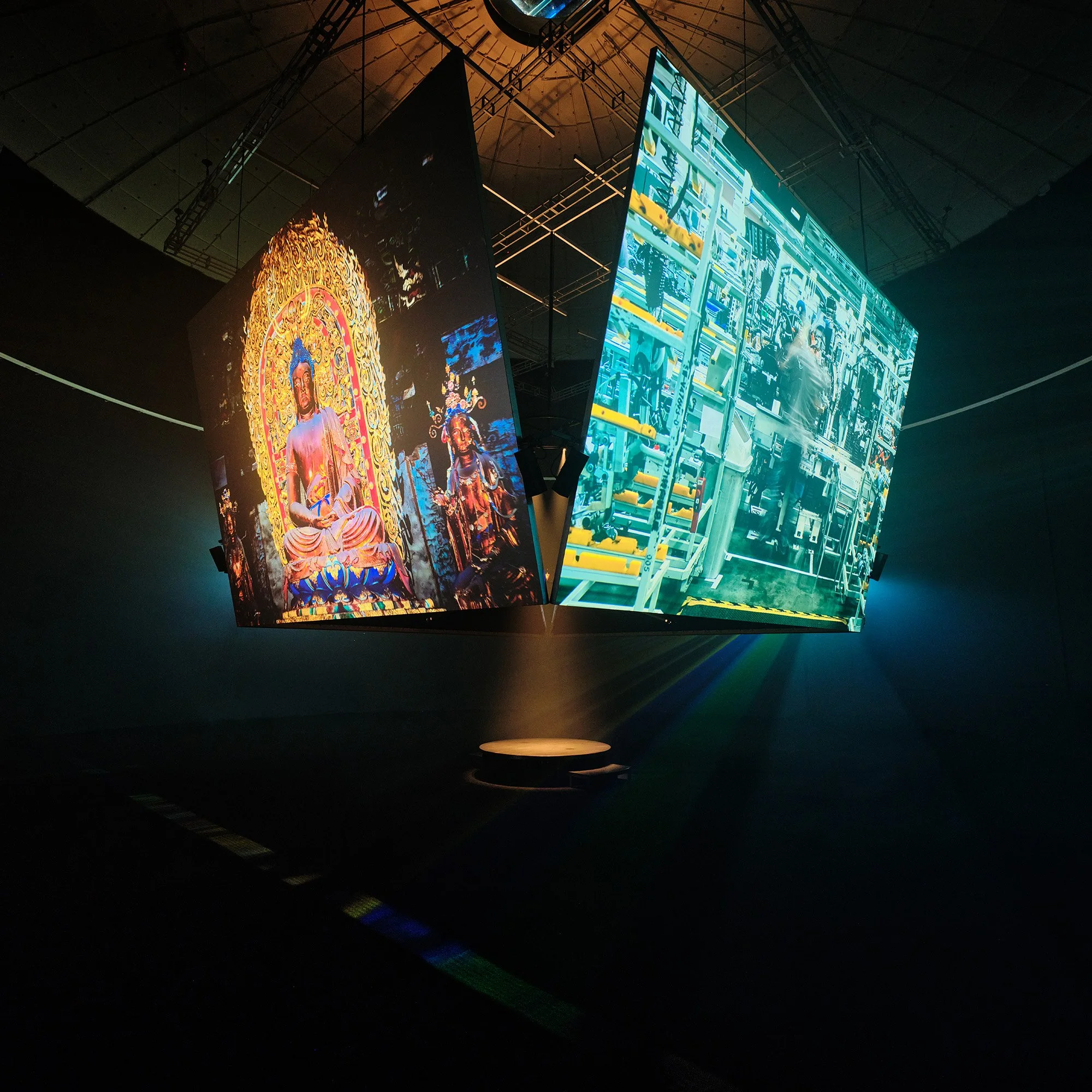
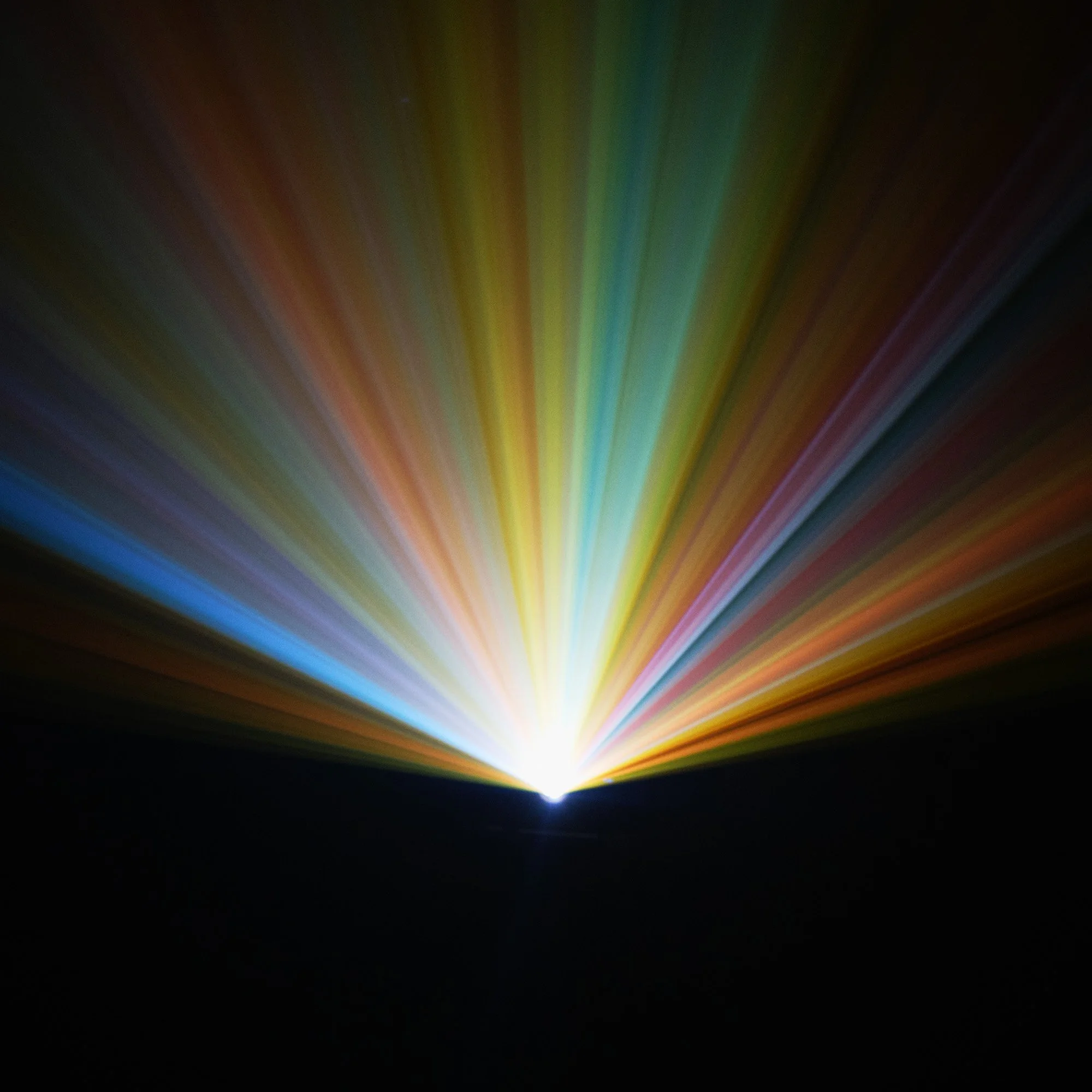
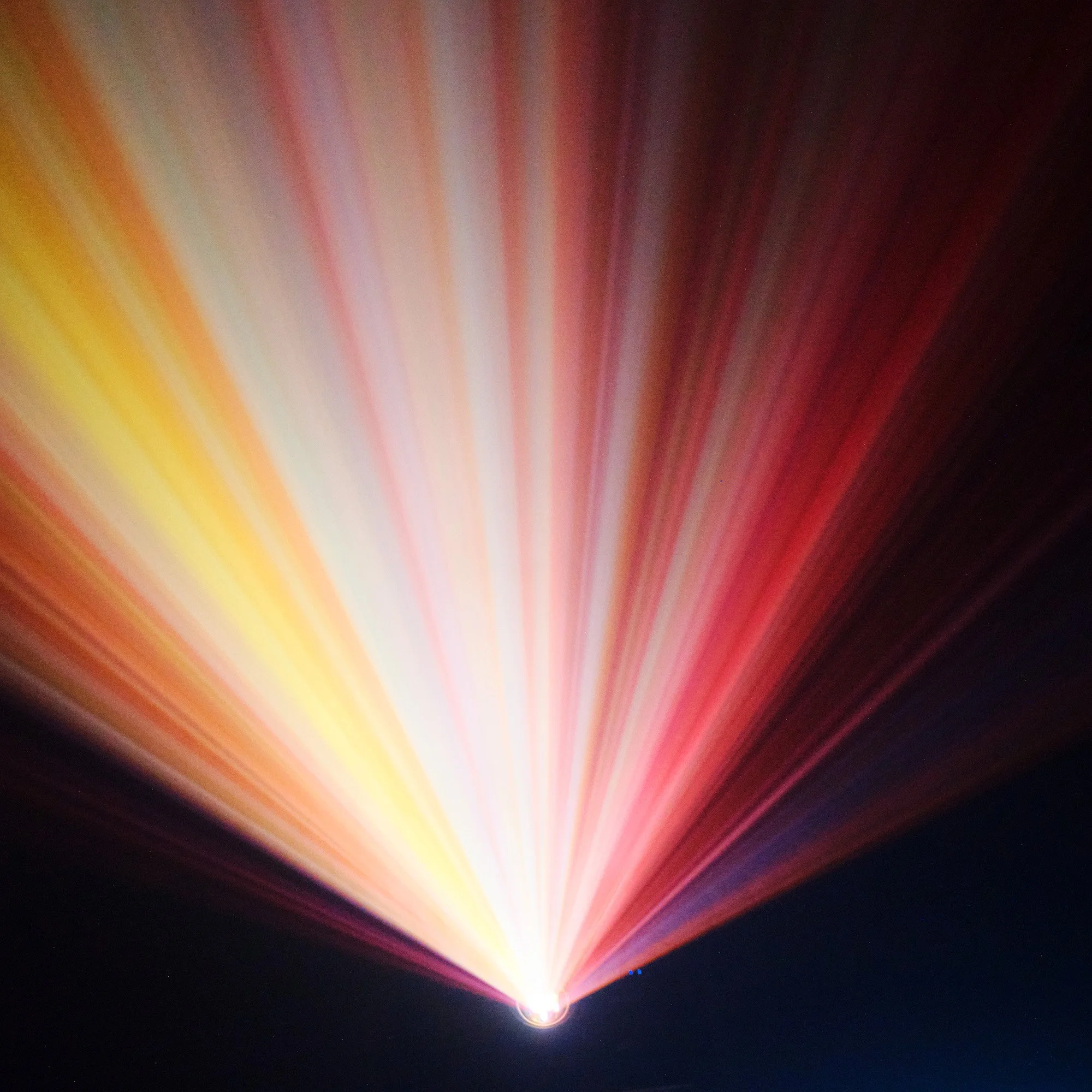
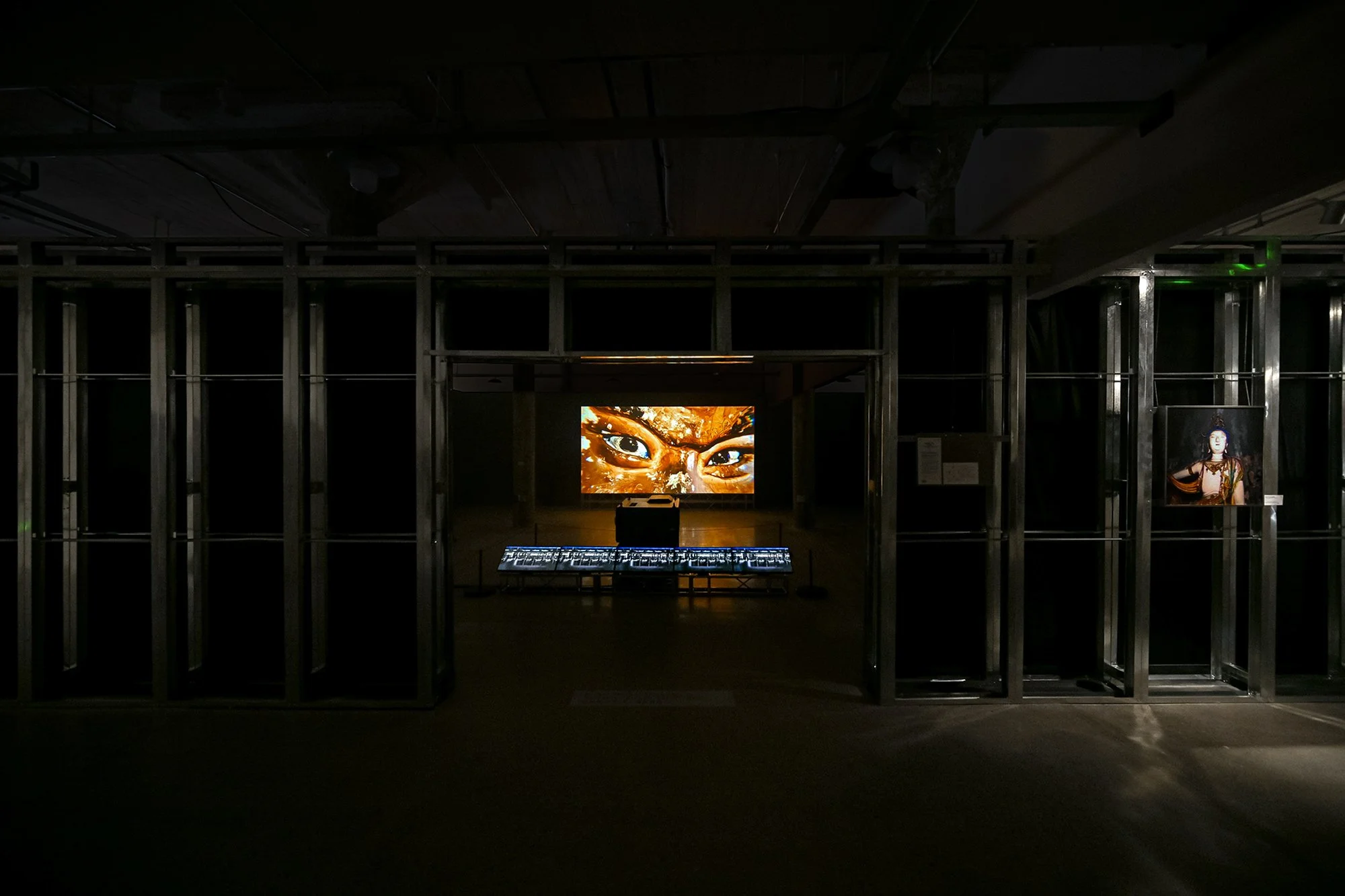
From July 5 to September 7, 2025, artist Lu Sisi presents his latest solo exhibition, SUNSET DRUM SUNRISE BELL: IV Quadrate, at TANK Shanghai. The exhibition features a newly commissioned body of video and installation works created in 2025. It marks Lu Sisi’s first large-scale solo exhibition in China, and an important moment in his practice: the first time he brings installation, moving image, performance, sound, and exhibition-making into a deeply integrated spatial form.
Having lived in the United Kingdom for many years, Lu’s practice has been profoundly shaped by the remnants of Europe’s industrial past, as well as by the electronic and industrial music cultures of the 1990s. As both an artist and musician, he has developed a multimedia practice that moves across moving image, music, live performance, and installation. His fascination with industry is not rooted in nostalgia. Rather, he approaches industrial tools and spaces as physical archives. Through sampling, cutting, editing, and synthesis, familiar images and sounds of printers, textile mills, factories, and industrial ruins are transformed into rhythm-based abstract landscapes. The echoes of history become metaphors for the future: at times an unsettling dystopian ecstasy, at times a sublime hymn to industrial force.
After returning to China and relocating to Shanghai, Lu initiated a new body of work in 2020 titled SUNSET DRUM SUNRISE BELL. This shift in cultural position prompted a conscious transformation in his artistic language. He began to place the visual and sonic elements of Chinese tradition in dialogue, confrontation, and fusion with contemporary industrial imagery and soundscapes. At the same time, he brought into his work the temporal structures, ritual systems, and cosmological thinking embedded within traditional culture, constructing a polyphonic structure distinct from linear narratives of progress.
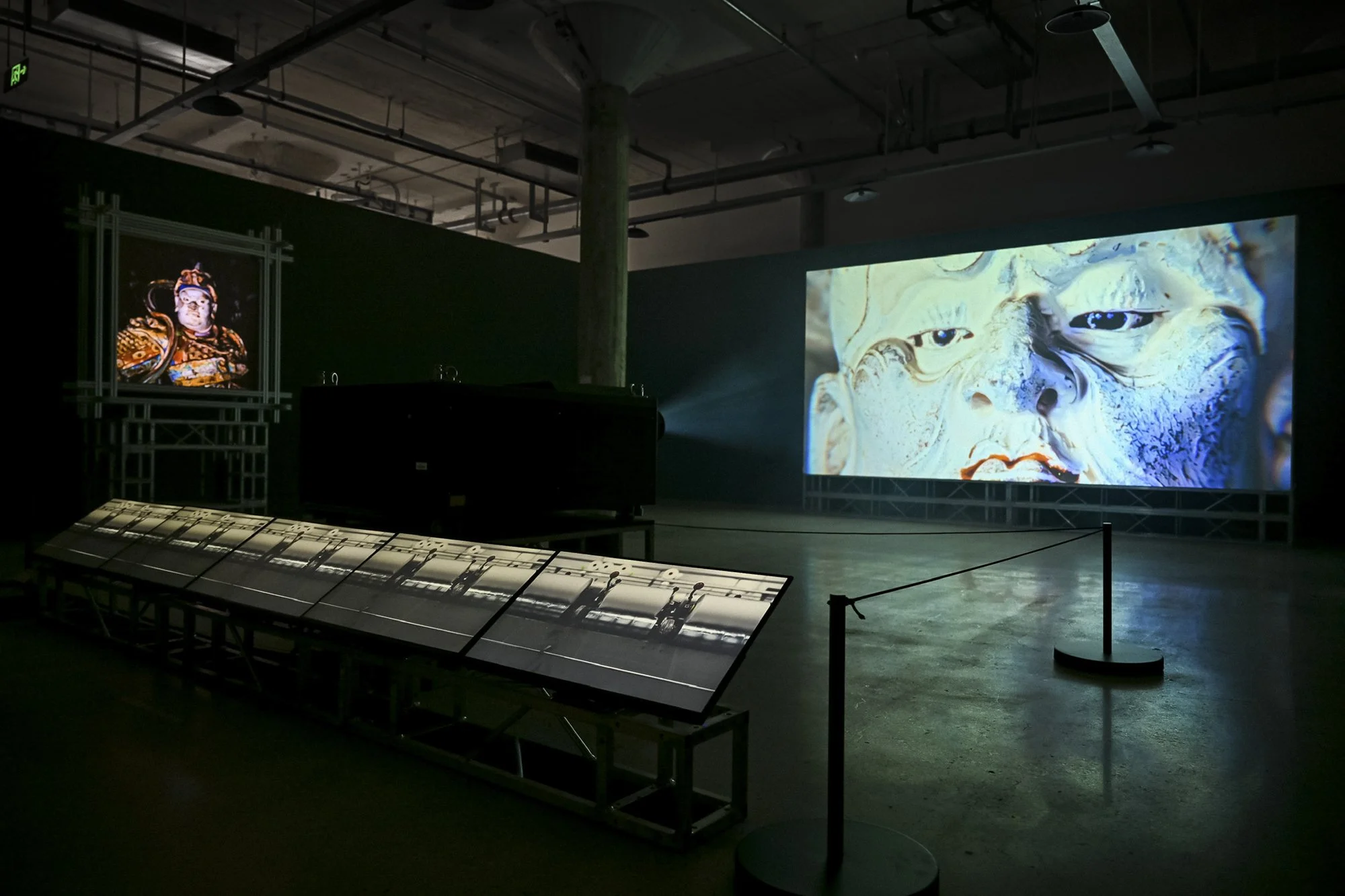
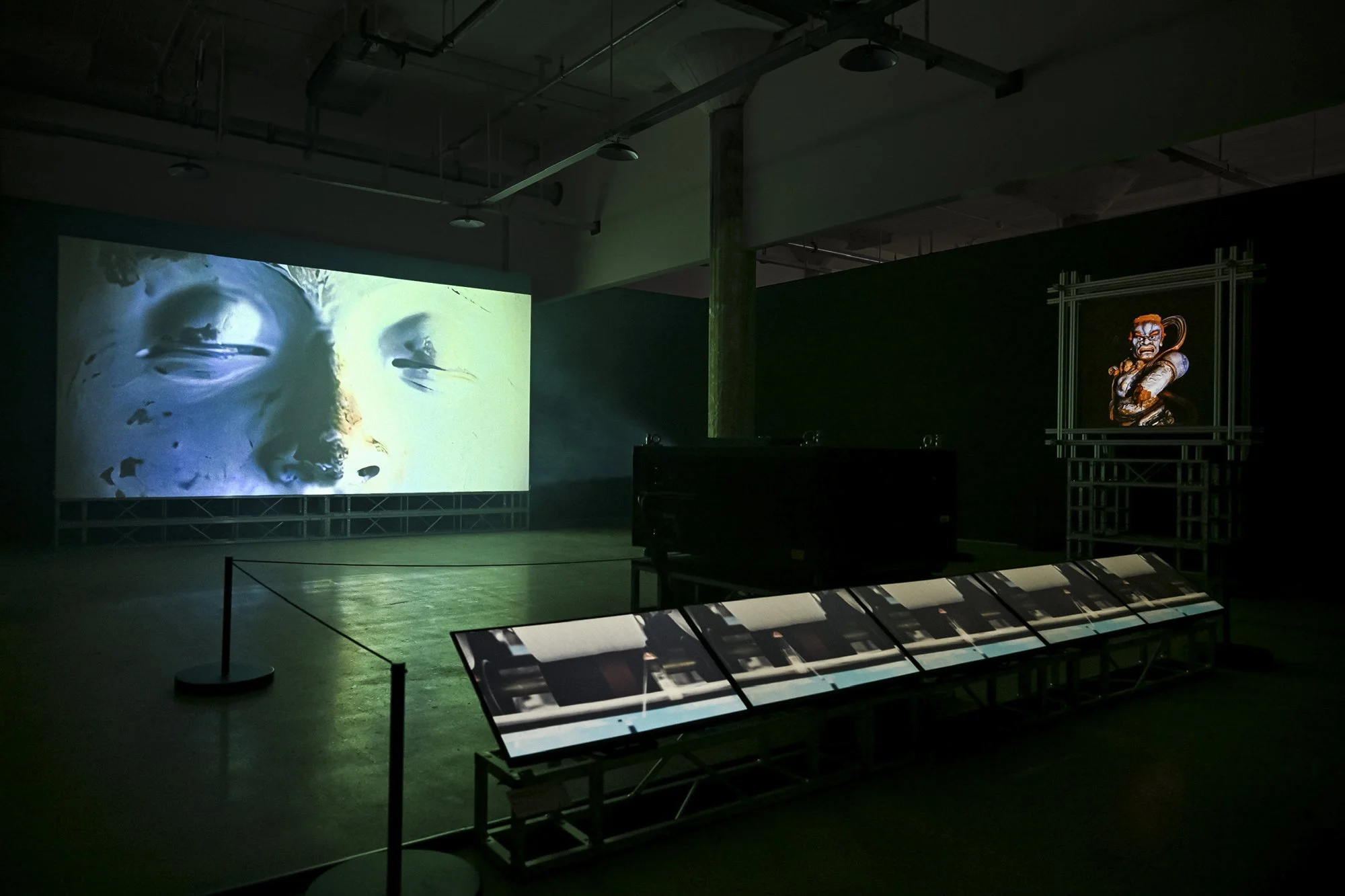
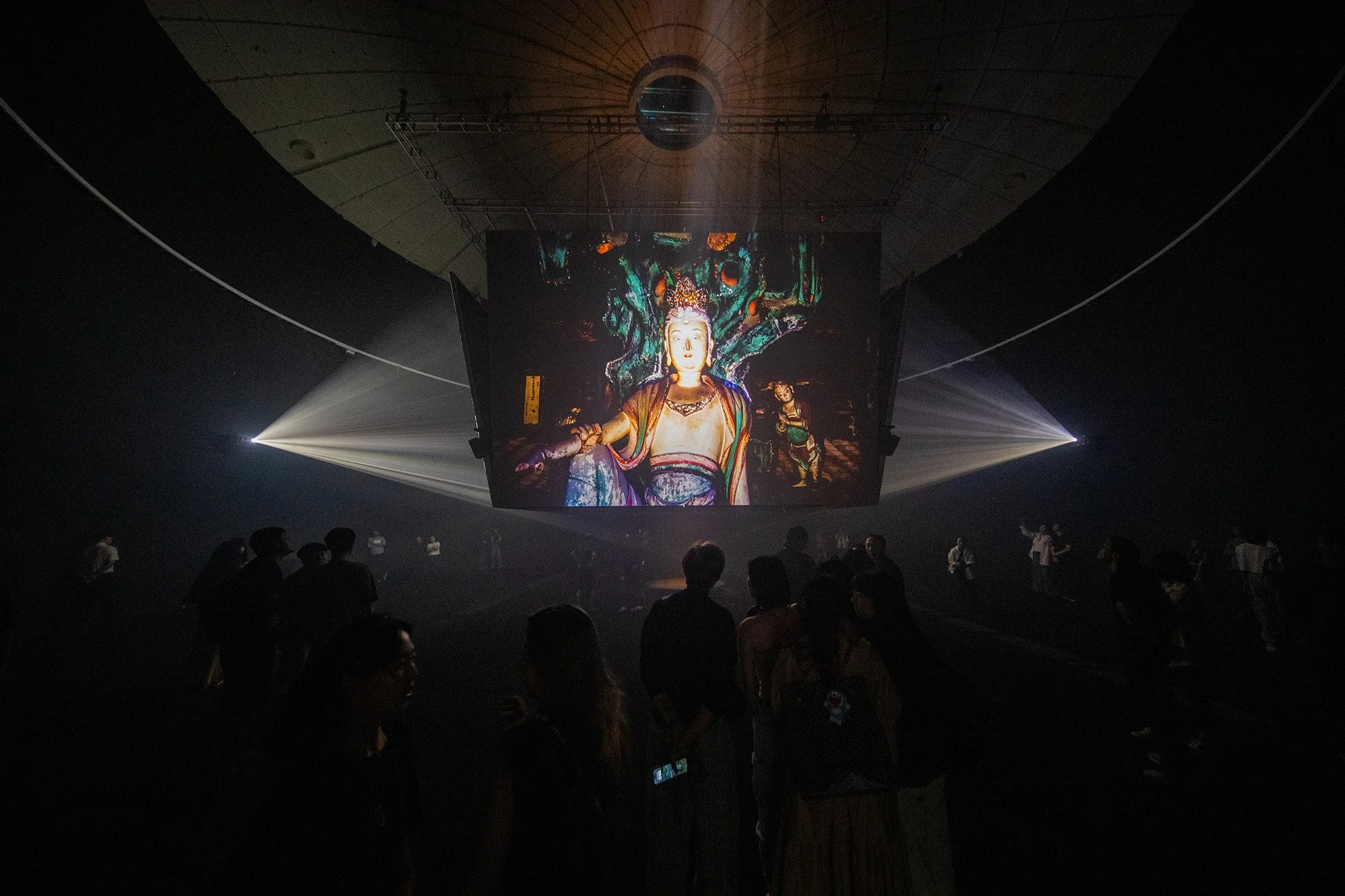
As the latest chapter of this ongoing project, IV Quadrate returns to Lu’s earliest method of gathering inspiration: travelling through ancient temples and modern factories to collect images and sounds. His lens focuses on religious sculptures in Shanxi, a choice that appears almost instinctive. Shanxi’s clay temple sculptures are extraordinarily diverse in style, reflecting aesthetic and technical transformations across different historical periods, while also preserving a vast number of folk deities. Moving between Confucian, Buddhist, and Daoist belief systems, these figures are at once sacred and worldly, created in response to practical, functional, and spiritual needs in everyday life. Lu records the gestures, expressions, surfaces, and textures of both canonical and non-canonical deities, bringing them together with industrial imagery to form a multi-chapter, four-channel moving-image work.
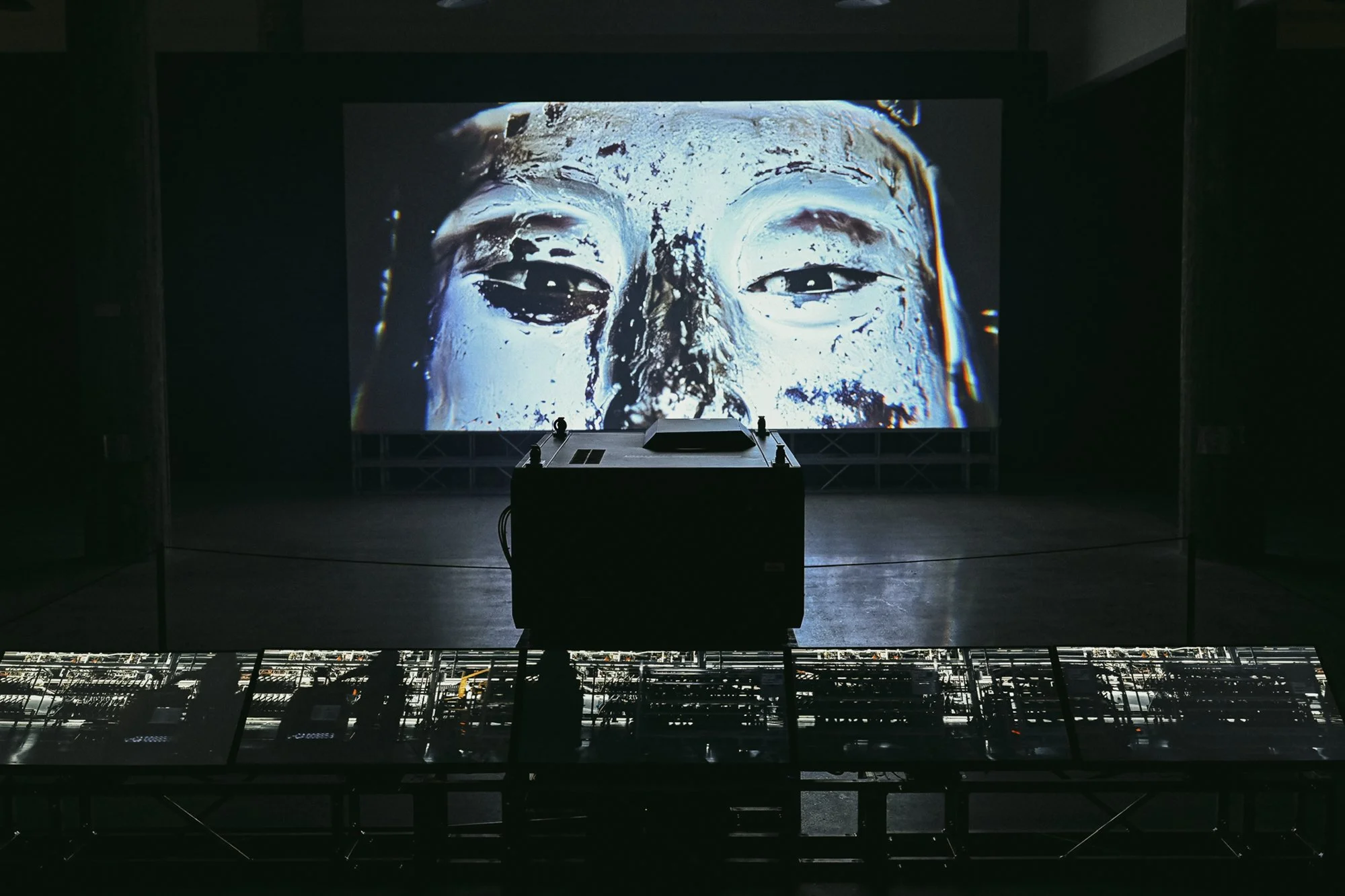
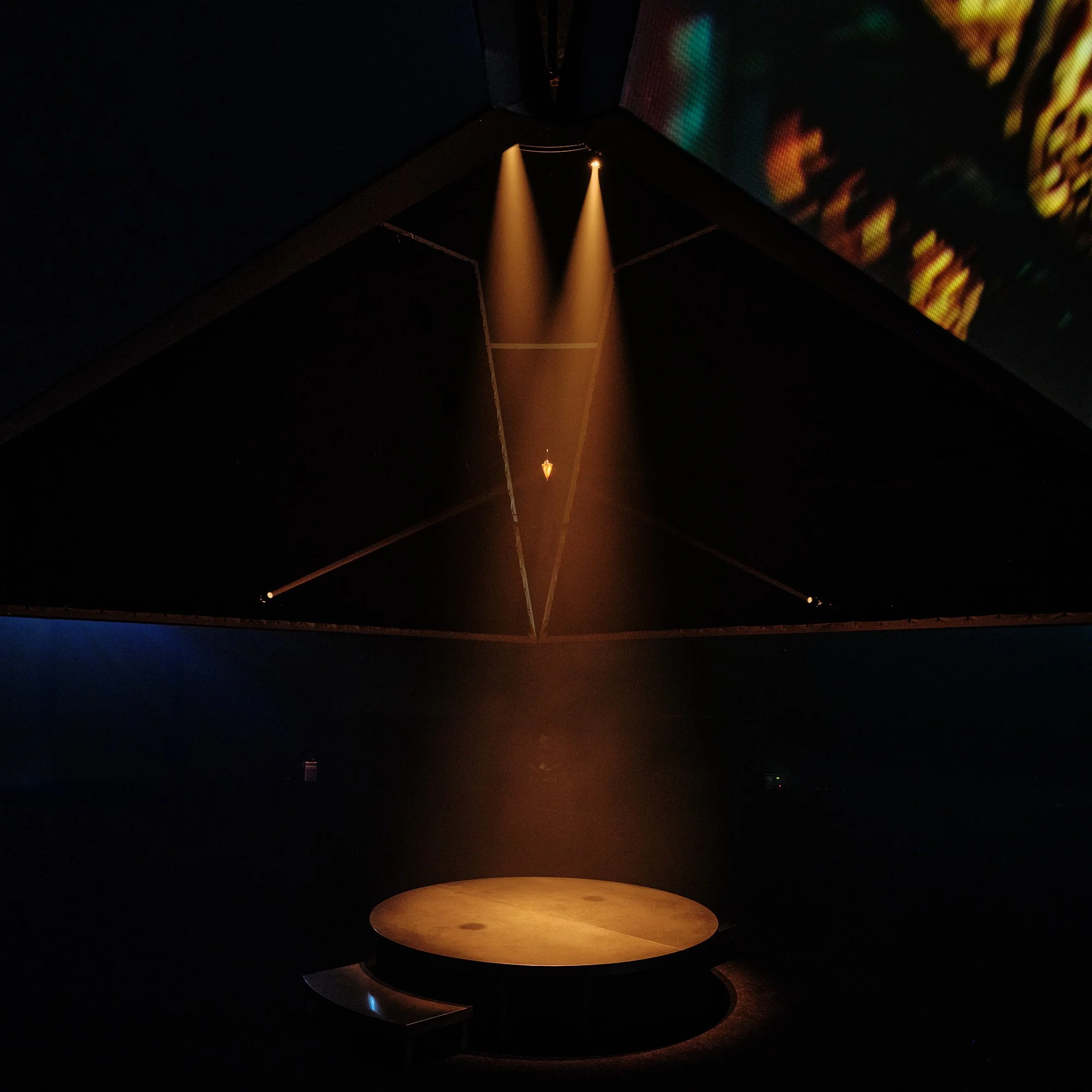
Within the circular architecture of TANK, Lu constructs a square structure with four projection screens. The audience cannot grasp the entire environment from a single viewpoint; instead, their movement through the space activates shifting layers of sound shaped by the architecture itself. Moving industrial spaces, blurred silhouettes of workers, and still images of Buddhist sculptures appear in alternation. Repetitive mechanical sounds, quiet ambient music, and intense electronic compositions converge into a dense field of resonance.
Lu describes the work as follows: “The mechanical rhythms of industry merge with the forms, sounds, ritual instruments, and aesthetics of Buddhism and Daoism. Sound gives shape to form; brushstrokes summon melody. I am attempting to explore a kind of abstract beauty rooted in the figurative traditions of Chinese culture.”
At certain moments, chant-like human voices emerge between the chapters, offering a source of calm within the work. They sound solemn and sacred, yet they are also strangely unstable. These voices are the “errors” generated after Lu trained artificial intelligence on his own voice. Their tones and rhythms resemble chanting, while their meanings and pronunciations quietly deviate from language. In doing so, they point toward the increasingly blurred boundaries between faith, technology, and the individual.
At the centre of the space, enclosed by the backs of the four screens, a circular platform is placed within the square structure. Visitors may stand upon it, where sound is reflected evenly from all directions, while low-frequency speakers beneath the platform transmit vibrations directly into the body. Suspended above the visitor is a golden industrial tower drill, hovering like a ritual instrument that affirms the presence of the person standing below. Lu seeks to create a ritual within the exhibition space, in which the viewer is no longer merely a receiver of information, but becomes a mediator of energy. Perception turns inward, inviting each individual to search for their own frequency and force.
The title SUNSET DRUM SUNRISE BELL originates from the daily Buddhist monastic ritual of striking the evening drum and ringing the morning bell. For Lu, the project is also a form of personal practice. The four chapters of IV Quadrate present different states in which traditional culture and contemporary industry collide, overlap, and merge. They also correspond to shifting emotional dimensions within this journey of practice: at times calm and lucid, at times angry and confrontational, at times compassionate and whispering.
Although the human figure is largely absent, traces of private emotion and collective labour are everywhere — in the factory, in the eyes of the Buddha, in the vibration of the space itself. This multi-act drama performed by non-human things continues to summon individual feeling and collective memory, staging a romantic epic for the technological age. In the final passages, the image gradually turns toward abstraction and the microscopic. Forms recede, leaving only flickering particles and subtle vibrations, as if rising from the depths of consciousness.
At the core of SUNSET DRUM SUNRISE BELL is the construction of 阵 — formation, field, or energetic array. This journey between factories and temples is both a return to Lu’s own cultural identity and a renewed encounter with it. It is also a question posed in the language of the cybernetic age: amid the digital flood, how might technology help us preserve the inner “morning bell and evening drum” of the spirit?
Temples visited and filmed:
Wuyue Temple, Taifu Guan, Zishou Temple, Zhenguo Temple, Shuanglin Temple, Xiaoxitian, Guangsheng Temple, Fusheng Temple, Baitai Temple, Longxing Temple, Sanguan Temple, Huguo Shanqing Temple, Tiefo Temple, Chongqing Temple, Qinglian Temple, Yuhuang Temple, Guandi Temple, Tiantai An, Guanyin Tang, Xiahuo Huguo Lingkuang Wang Temple.
Factories featured:
NIO Hefei New Energy Vehicle Factory
Foshan Nanhai Anfeng Technology Co., Ltd.
Sunset Drum Sunrise Bell·IV Quadrate |Special Presentation
Corridors of Time: Collector Cribs by LARRY’S LIST | Guang’er Warehouse, Shanghai, China 2025
In Lu Sisi’s 「SUNSET DRUM SUNRISE BELL」 series, he sustains his exploration of the path integrating traditional culture and contemporary industrial elements. Fascinated by ancient divine statues and the precision of contemporary industry, Lu does not view these two as opposites. Just as ancient craftsmen created statues with rulers as aids, he seeks a balance between extreme control and individual inspiration, conveying the inquiry into the essence of culture and creation in the digital age.
The core video works in this exhibition largely present the eyes of ancient statues, using gaze to guide the audience into an "inside-out" inward exploration. The three installation works exhibited alongside bring the spiritual connotations embodied by ancient divine statues into collision with the rational measurements symbolised by the standardised tool "ruler," building a bridge between concrete symbols and abstract perceptions.
Lu Sisi has collaborated with Delta Group to custom-design an 8K ultra-high definition projection solution specifically for this exhibition. Through ultra-high-definition resolution projection, it presents the balance between technology and art, pursuing the ultimate experience of visual art.